Mystery over Methods
Some church history, anyone?
For many people, church history prompts a roll of the eyes and an unspoken question: Why? That was certainly my reaction when I first encountered the subject. Yet I was fortunate to have an excellent teacher who brought it to life. More recently, I've also enjoyed a podcast exploring the history of Christianity (which, it turns out, is about far more than just the church) and what we can learn from the past in the hope that we don't repeat some of the same mistakes.
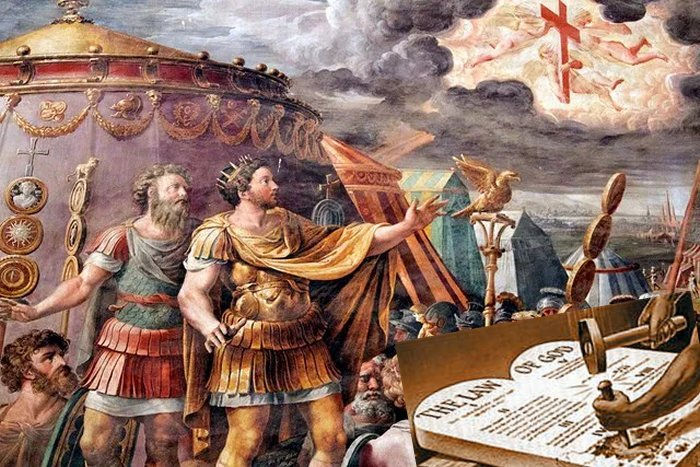
Lately, I've been learning more about Emperor Constantine, who famously converted after seeing a sign before a battle in AD 312 and then went on to make Christianity the official religion of the Roman Empire. It has been fascinating to study his story after his battlefield conversion.
Constantine appears to have been a liminal Christian, not committing to a life following Christ or in the church community, and delaying his baptism until just a few days before his death. Only after this did he receive the prayers of the bishops, share in communion, and join the corporate prayers of the church.
Prior to AD312, for a variety of reasons, people were generally expected to undergo a lengthy period of formation - known as catechesis - before baptism. Over a number of years, they would learn to live in a Christ-like way under the guidance of mature Christians. Only then would they be baptised, receive communion, and fully participate in the worshipping life of the church.
Interestingly, even at his baptism Constantine defined what a Christ-like life would look like for him, deciding he would no longer wear the imperial purple robe. Unfortunately, we don't know exactly why he chose this act or what significance it held for him, although historians have suggested several plausible explanations.
Constantine's journey with Christianity had a profound impact on the way the Christian faith developed after AD 312.
One of those changes was a gradual move from mystery to methods.
Constantine used the power of the state to encourage the spread of Christianity. Eusebius records him as saying that he hoped "the human race [might be] enlightened through my instrumentality." He pursued this in two ways. First, he actively supported the church through buildings, financial resources, and political influence. Second, he discouraged - and at times prohibited and punished - the practice of other religions. For Constantine, Christianity would spread through the effective use of power and method.
This marked a contrast with the experience of the early church.
For the first three centuries, Christians sought simply to worship God and become people and communities that reflected Christ in their lives together. As other people encountered their distinctive lives, many became curious about the Christian faith, and the church grew. Numerical growth was not the primary aim of this character transformation, and to the early church, growth was a mystery and the product of God’s invisible power through the Holy Spirit at work in the work.
Gradually, however, the church shifted from trusting in God's mysterious agency to placing increasing confidence in human control, methods, and strategy. This change was neither immediate nor intentional. It seeped in over time.
It is easy to look back and judge, shaking our heads at those who went before us. Yet I wonder whether we face a similar temptation today. Are there times when we sacrifice faith in the mystery of God's invisible work for the certainty of our methods and strategies?
I want to suggest that we can hold together a genuine missional desire to see people drawn to Jesus with a life shaped by his character, while still leaving room for God to lead in surprising and mysterious ways.
Perhaps part of the challenge lies in how we hold our strategies and methods. Do we cling to them, expecting them to produce the desired results simply because they worked before? Do we assume the course must always be completed, the event repeated, or the programme delivered exactly as planned? Or are we willing to make space for the Spirit to interrupt our plans and lead us somewhere unexpected?
Perhaps the Alpha Course we're running doesn't need to finish because God wants to do something different among the people who have gathered. Perhaps our Sunday service needs to look completely different one week instead of following its familiar pattern. Perhaps we even need the humility to recognise that, for once, the show simply can't go on.
When I reflect on the most joyful moments in ministry, they have rarely come at the successful conclusion of a service, event, course, or programme. They have come in those mysterious moments when God's invisible work suddenly becomes, if only briefly, visible.
I wonder whether, as we learn to value mystery more than method, we might discover more of that joy too.
Sam Abramian
Director, East of England


Comments